

When Does Technology Actually Make an Experience Better?
Drones. Projection mapping. Interactive screens. Lasers. Immersive sound. Extended reality.
The possibilities for integrating technology into live experiences have never been greater.
But having access to technology and knowing why to use it are two very different things.
The question shouldn’t be:
What technology can we add?
It should be:
What are we trying to make people experience?
Because technology isn’t the experience.
It’s one of the tools we use to create it.
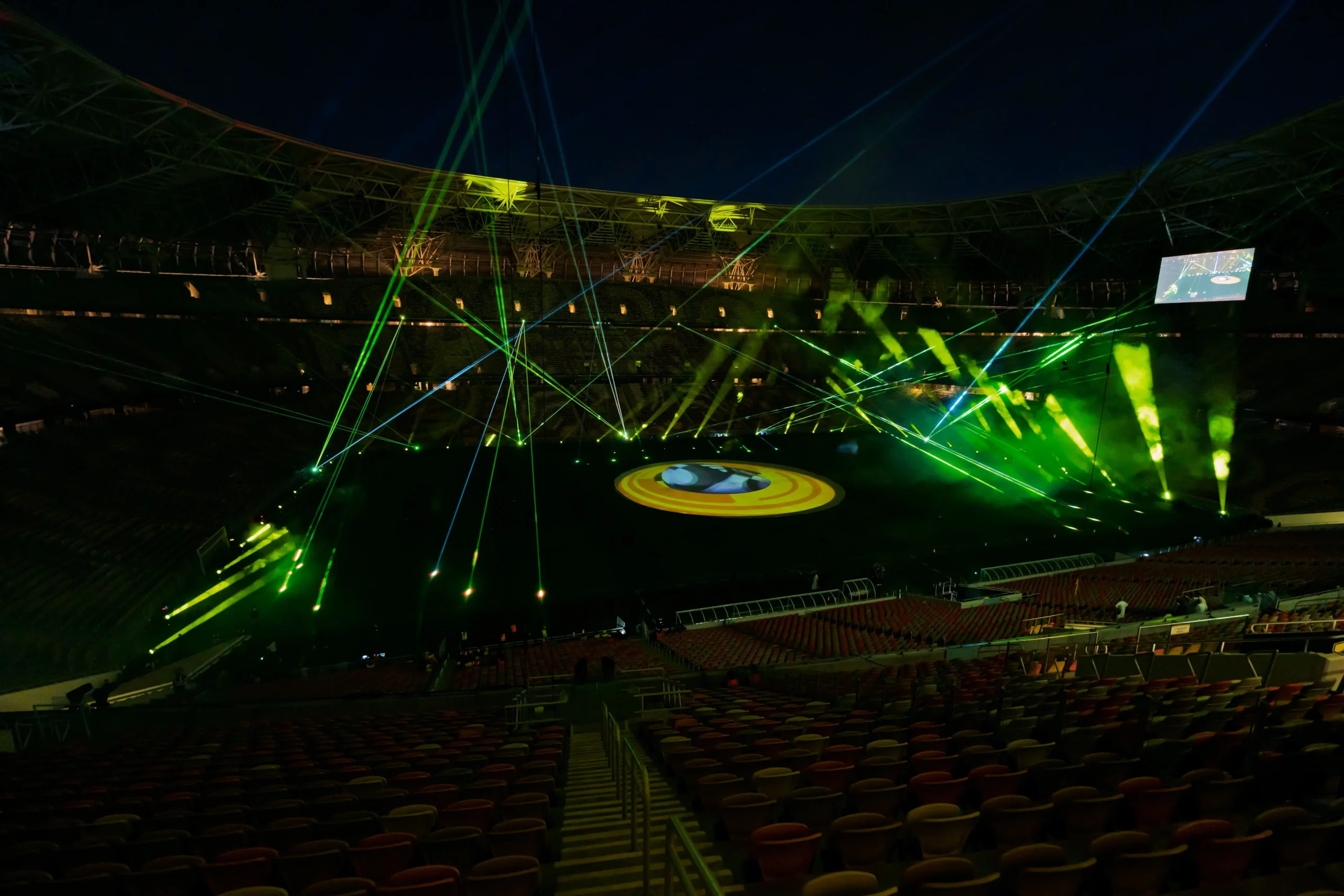
Start with the feeling, not the equipment
Every experience should have an emotional objective.
Should the audience feel wonder? Curiosity? Pride? Excitement? Intimacy? A sense of collective energy?
Once that’s understood, technology can help create the conditions for that feeling.
Projection can transform a familiar environment. Lighting can change its scale and energy. Sound can build tension or intimacy. Interactive technology can turn spectators into participants. Drones can extend a story beyond the physical boundaries of a stage.
But none of these technologies inherently creates meaning.
That comes from the idea behind them.
FROM THE PLAYBOOK
Technology should never be the idea.
It should make the idea possible.
Give every technology a role
One of the easiest traps in large-scale experience design is accumulation.
More screens. More lights. More effects. More technology.
More isn’t necessarily more immersive.
When several technologies are being used within the same experience, each should have a purpose. One might establish atmosphere while another carries narrative. One creates scale while another draws attention to a precise moment.
The objective isn’t to make every element noticeable.
It’s to make them work together.
This becomes particularly important in complex live environments, where lighting, projection, sound, special effects and digital content may all be operating simultaneously.
Good technical design isn’t only knowing what to turn on.
Sometimes it’s knowing what to turn down.
Design for more than one audience
The audience isn’t always standing in front of you.
A major live experience might be encountered inside a venue, through a television broadcast, on a mobile screen or days later through digital content.
Each perspective changes how the experience is perceived.
A moment that feels enormous inside a stadium may disappear through a camera lens. Something designed beautifully for broadcast may lack impact for someone sitting at the opposite end of the venue.
This means creative and technical direction need to consider multiple viewpoints from the beginning.
The goal isn’t to reproduce exactly the same experience everywhere.
It’s to preserve its impact.
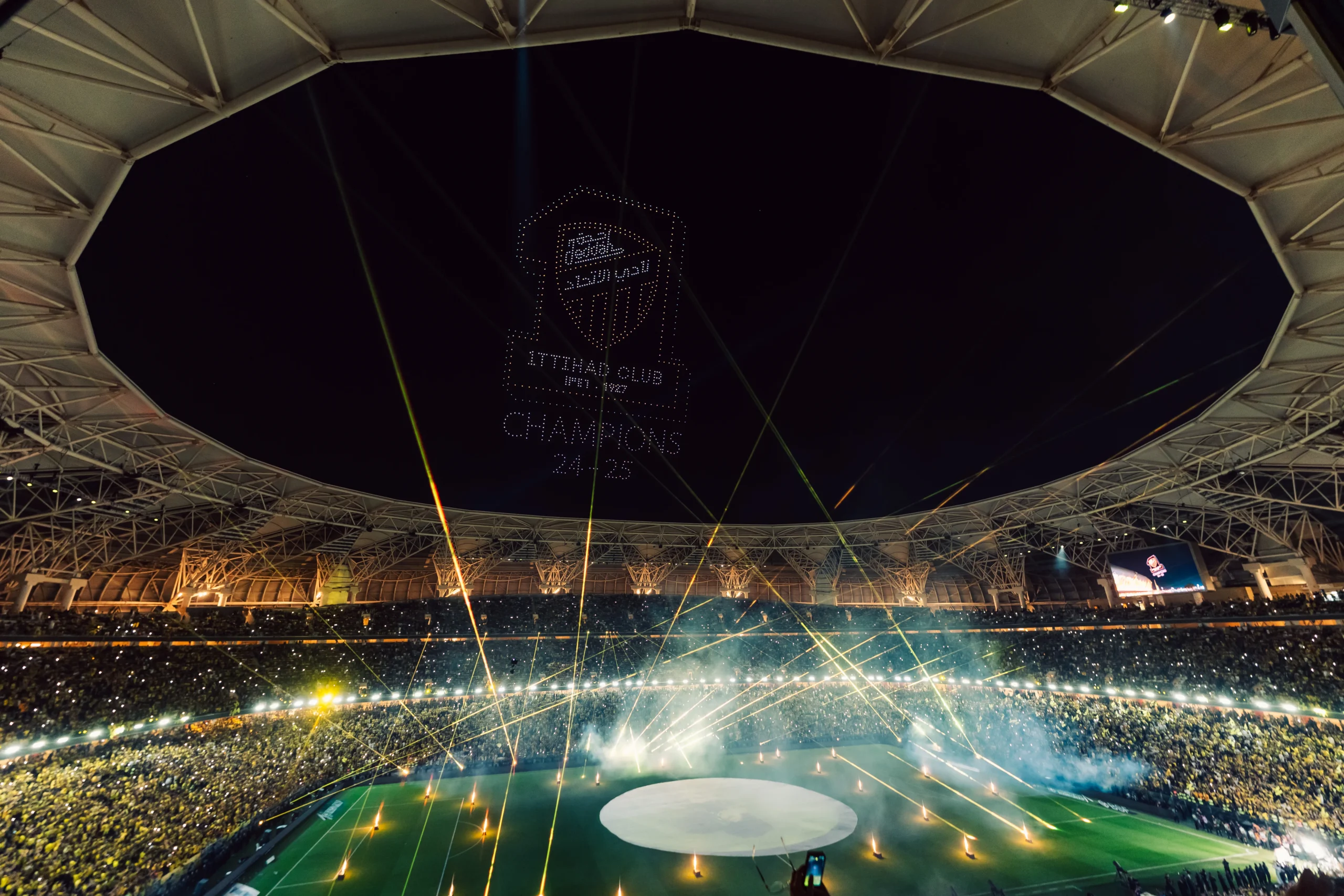
Technology works best when it disappears into the story
Some of the most sophisticated uses of technology are the ones audiences don’t consciously stop to analyse.
They’re simply immersed in what is happening.
When technology becomes the centre of attention without contributing to the story, the experience can quickly become a demonstration of capability rather than a meaningful moment.
At entourage, technology is considered as part of the wider creative direction of an experience. The idea, audience and environment determine what role technology should play, not the other way around.
Across large-scale ceremonies, cultural experiences, conferences and brand platforms, this means bringing creative and technical thinking together early enough for each discipline to strengthen the other.
And sometimes, the answer is no technology at all
Not every idea needs a screen.
Not every interaction needs to be digital.
And not every memorable moment needs to demonstrate what’s technically possible.
Sometimes the most powerful solution is physical, analogue or entirely human.
The job of technology isn’t to prove that it can be used.
It’s to help us tell a story, create an emotion or enable an experience that otherwise couldn’t exist.
Because the best question isn’t whether the technology is impressive.
It’s whether the experience would be better without it.
Explore entourage’s experience and creative work to see how storytelling, technology and creative direction come together across live experiences.